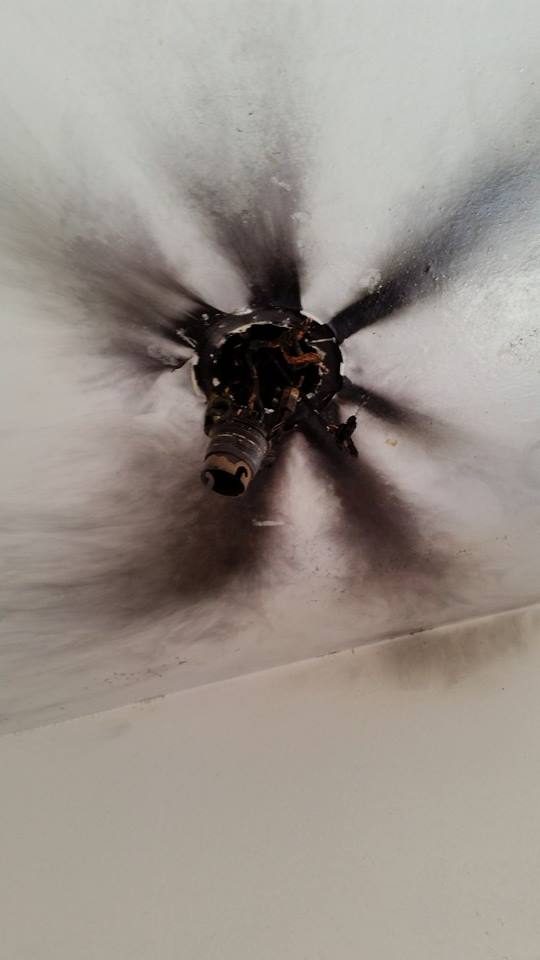
Ambient Electrical does electrical fault finding and repairs across Sydney's Eastern Suburbs, tracing why a safety switch keeps tripping, a circuit is dead, lights flicker or a power point is scorched, rather than patching the symptom. The two most common faults are open circuits, from a loose or corroded connection, and short circuits, where failed insulation lets two conductors touch.
Who
Peter Stafford, NSW contractor licence 237173C (Electrician class)
Where
Sydney's Eastern Suburbs, from Bronte
Price
Peter gives you a clear quote before any work starts.
Paperwork
NSW law requires a CCEW for this work, and the eCert portal sends you a copy (what a CCEW is)
What causes an electrical fault?
There are three common types of electrical fault in a circuit:
Open circuit fault: a loose, open or corroded connection that stops current flowing properly. Knowing where to look saves a great deal of time and money.
Short circuit fault: failed insulation or loose cabling lets two live conductors touch. It usually trips a circuit breaker or blows a fuse, and on an installation that is not up to standard it can smoulder and start a fire.
Earth fault: a live conductor touches a conductive surface and makes an appliance live. Without an RCD (safety switch), touching it gives an electric shock. It can come from a loose connection or a crossed conductor at a termination, such as a power point.
Electrical repairs we do most
Ambient Electrical specialises in finding and fixing electrical faults, from a power outage in one part of the house to a circuit that trips every time an appliance goes on, or electric hot water that has gone cold.
Pete’s an absolute legend. Came out to fix a couple of electrical issues plus install a new fan. Prompt, polite, and kept everything tidy. Couldn't recommend him highly enough
The problem: The three-phase isolator on a sub-board upstairs, which controls the oven and power circuits, was not working properly.
What Peter did:
Tested the 32 A three-phase main switch in the main switch room, on its supply side and its load side
Supply side: 415 volts between every pair of phases, as it should be
Load side: 415 volts between two of the phases, but 240 volts across the other two pairs, where 415 should be
Found no continuity through the main switch on the third phase (the blue cable)
The result: The fault was in the main switch downstairs, not the sub-board upstairs. The fix is to replace it with a new 32 A three-phase main switch from a reputable brand.
My recommendation, folks, is to stay with the reputable brands.
Emergency callouts across the Eastern Suburbs: sparks, burning smells, no power, water in electrics.
Read more
Electrical faults: common questions
01
What is an electrical fault?
An electrical fault is any defect that lets current flow where it should not, or stops it flowing where it should. The common ones are an open circuit, from a loose, open or corroded connection; a short circuit, where failed insulation lets two conductors touch; and an earth fault, where current leaks to earth, which is what a safety switch detects.
02
What are the signs of an electrical fault?
Lights that flicker or pulse, burnt-out power points, fuses or breakers that keep tripping, and any smell of smoke or sight of sparks all point to a fault somewhere in the installation. It is worth having it traced before it gets worse.
03
What causes electrical faults?
The two most common causes are open-circuit faults, from a loose, open or corroded connection that stops current flowing properly, and short-circuit faults, from failed insulation or loose cabling letting two live conductors touch. Ambient traces the root cause rather than patching the symptom, so the fault does not come back.
04
What affects the cost of finding and fixing an electrical fault?
The cost of fault finding depends mostly on how long the fault takes to trace: one that shows up every time is quicker to find than one that comes and goes, or only trips the safety switch after rain. The parts needed to fix it, and whether other damage is found along the way, make up the rest. Peter gives you a clear quote before the repair starts.
Call an emergency electrician now if there is a burning smell, sparks, smoke, a hot switch or power point, water near electrics, or no power that you cannot restore by resetting a tripped switch once.Read the guide